
The answers you were looking for! Review the FAQs below to learn more about the Unified Development Ordinance, zoning and subdivision regulations, purpose, and process. This page may grow over the course of the project to reflect answers to questions that arise from community input. Have a question that isn’t here? Submit one via the contact page.
What is a Unified Development Ordinance?
A Unified Development Ordinance (UDO) is a single, comprehensive document that combines a community’s various regulations for land use and development into one document. It replaces separate ordinances such as zoning and subdivision codes. By integrating these rules, a UDO aims to streamline the development process, modernize regulations to align with Plainfield’s long-term vision, and create a more coherent and efficient system for development.
What is Zoning?
Zoning is the main tool that the Village uses to manage the use and form of development. These rules are different in every community. It includes regulations for:
- The type of residence, business, community use, or other activity appropriate for a property.
- The intensity of the use of land.
- The size, height, and setback of buildings and structures.
- And a range of other things like landscaping, urban design, drive-throughs, home-based businesses, and off-street parking.
Zoning also is an important tool to implement a community’s Comprehensive Plan.
Zoning regulations including written rules (zoning ordinance) and a map:
- The ordinance includes regulations for different zoning districts, allowed uses, development standards, and administrative processes.
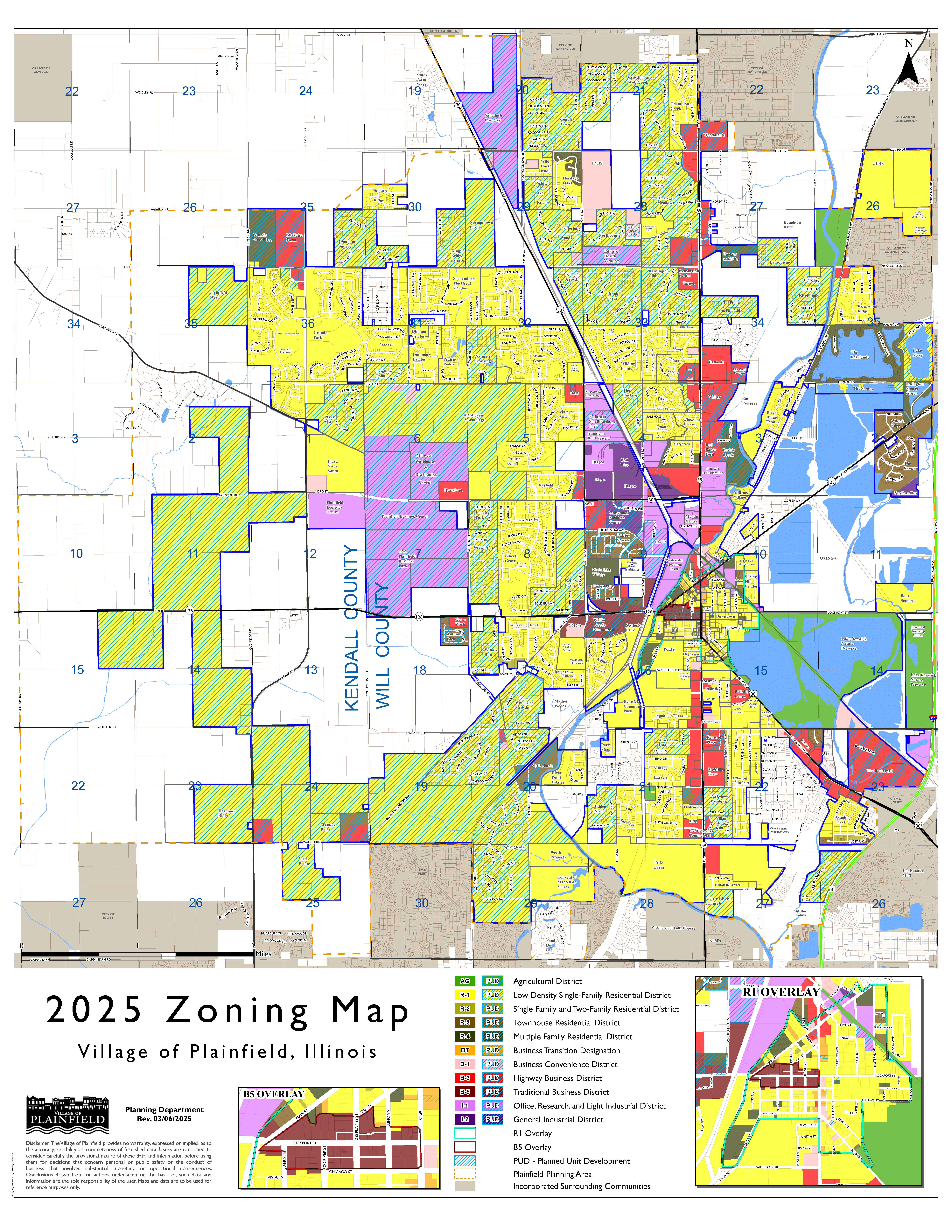
- The zoning map shows the location of the different zoning districts for residential, commercial, industrial, and agricultural uses.
Why is Zoning Important?
Zoning regulations provide predictability for property owners and neighbors, helping to promote livable and economically viable communities. Zoning balances the needs of homeowners, businesses, industry, institutions, and other community priorities. Zoning helps to protect public health and safety; to make neighborhoods nicer places to live; and to create business areas that are comfortable places to shop and work.
What are Zoning Districts?
Zoning districts are areas of similar and compatible land uses found in a part of the community, for example: Residential, Commercial, and Industrial. There are often multiple districts in each of these categories, and each will have different rules for what can be built.
What is Included in Zoning District Regulations?
Within a Zoning Ordinance, the Zoning District Standards provide the Purpose, Uses, and Bulk and Yard Requirements for each district.
- Purpose – A statement to describe the objectives of the zoning district so that the rules are applied in a clear and consistent manner.
- Uses – Each zoning district has a list of permitted and special uses:
- Permitted use: a land use that is clearly compatible with the zoning district’s purpose, and for which no special zoning permission is required.
- Special use: a land use that may have unique impacts on neighboring properties and requires specific permission, and perhaps conditions for operation; these uses require a public hearing and Village Board approval.
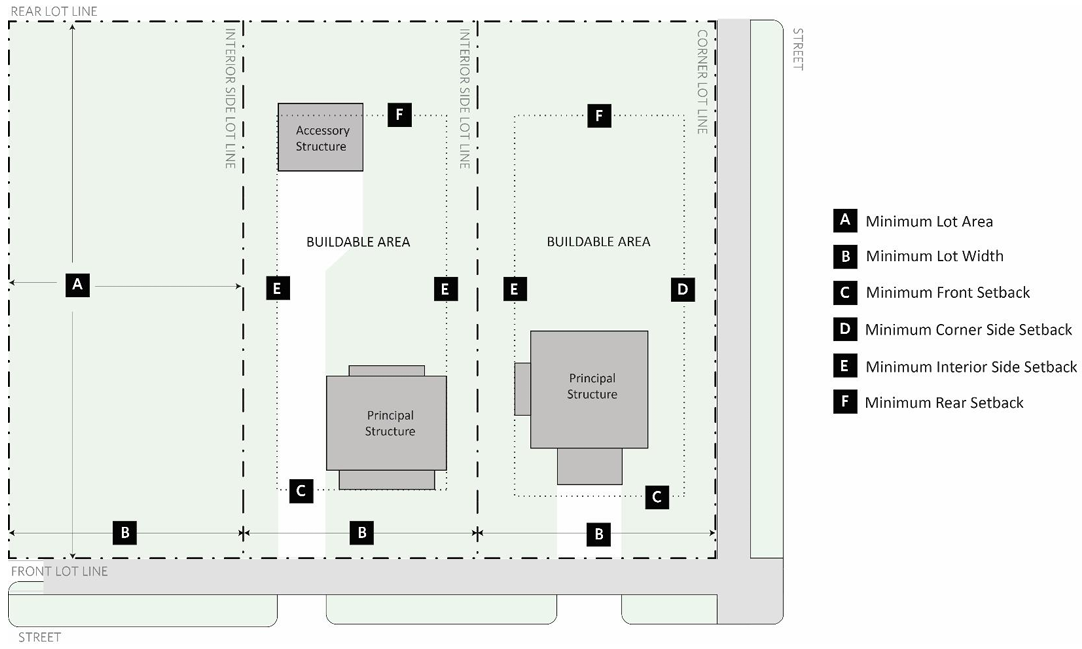
- Bulk and Yard Requirements – Development standards (see below) that govern the size, shape, height, etc. of buildings and structures.
What are Development Standards?
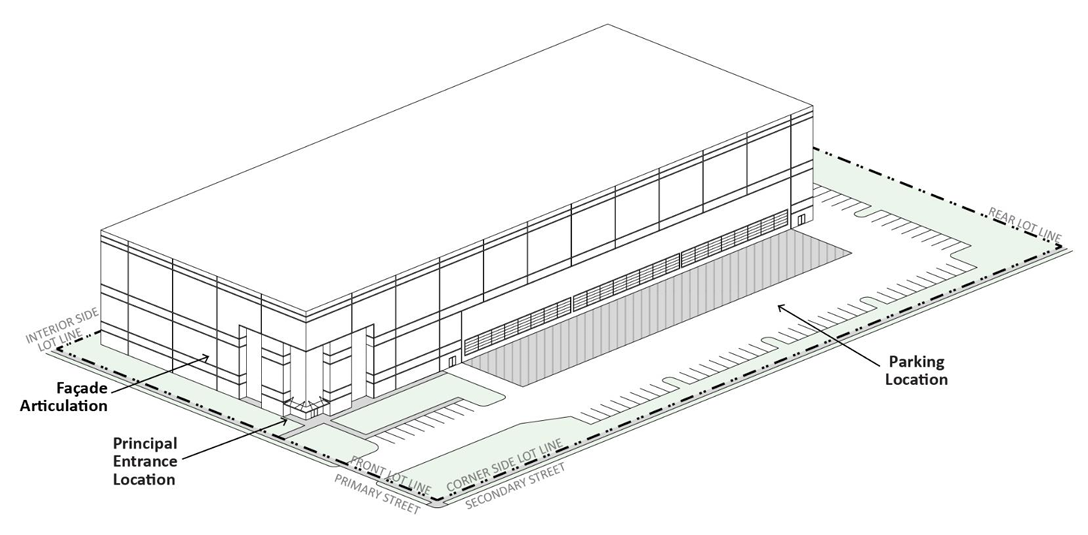
Zoning Ordinances establish development standards that work together to create a look and feel for different parts of the community. The standards include regulations for lot size, building setbacks, building height, lot coverage, open space, landscaping, and parking. A few of these key terms are defined below:
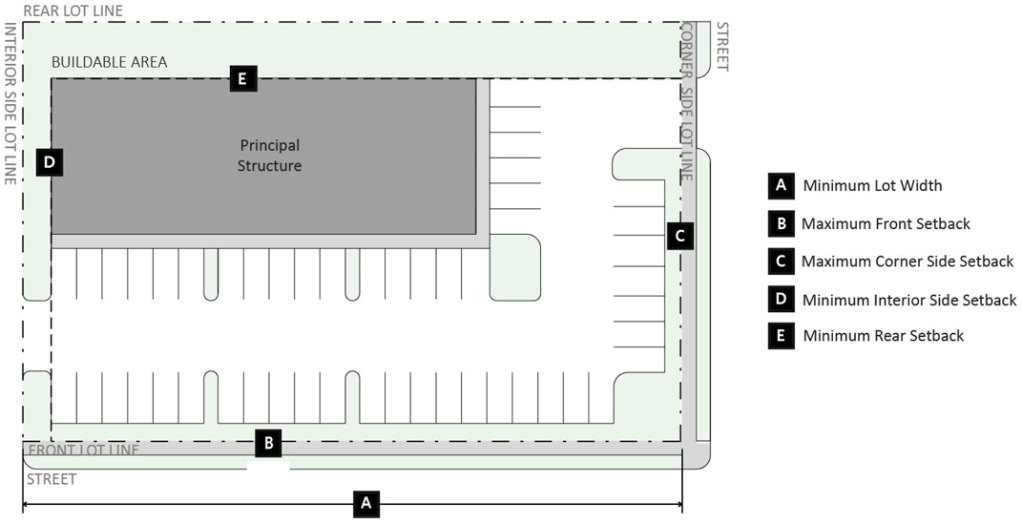
Building setbacks are the required minimum distances structures must be “set back” from property lines.
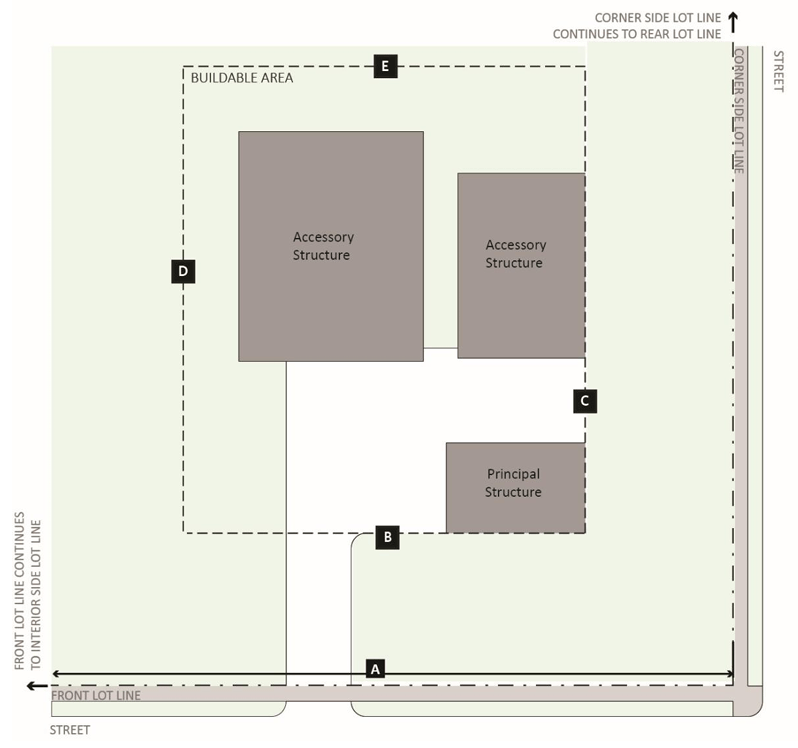
Lot coverage is the allowable percentage of a lot that may be covered by structures and pavement.
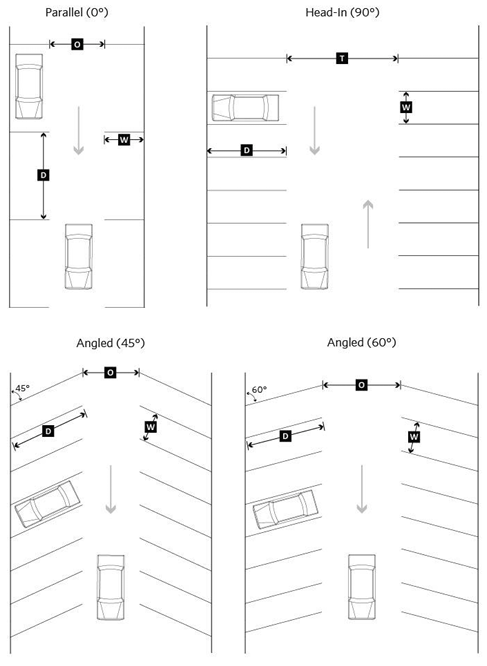
Parking requirements are included to ensure that adequate spaces are available for varying types of land uses.
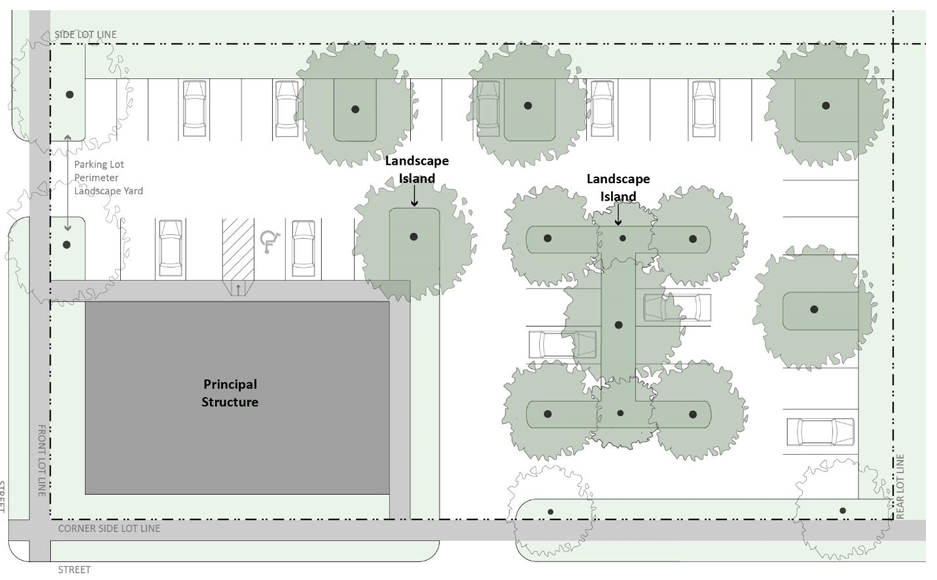
Landscaping standards are included to support more attractive and environmentally sensitive developments.
What is a Subdivision Ordinance?
A Subdivision Ordinance establishes the rules and regulations that guide how land is divided, platted, and improved. It outlines procedures and definitions, requirements for dividing land, and standards for new parks and schools. The ordinance also includes provisions related to special flood hazard areas, soil erosion and sediment control, stream and wetland protection, and storm water drainage and detention.
What are the Differences between Zoning and Subdivision Regulations?
Zoning determines the use and characteristics of land and buildings (e.g., what can be built, how tall, setbacks), while subdivision regulations manage the process of dividing land into new parcels, focusing on the creation of lots, blocks, streets, utilities, and infrastructure for new developments. Zoning controls what happens on a property, whereas subdivision regulations control how that property is divided to create neighborhoods and build new communities.
 Plainfield Unified Development Ordinance (UDO)